Normal eyesight, so why is reading still so tiring?
Many parents have wondered about this: their child's eyesight test is normal, yet reading quickly leads to tired eyes, skipped lines, or trouble reading for long.
A standard eye chart checks whether a child can see clearly. When reading, writing, or looking at a phone, both eyes also have to turn inward together and merge the images from the left and right eyes into a single picture. This eye coordination cannot be fully assessed with an eye chart alone.
As schoolwork, reading, and screen time increase, children spend more and more time on close-up tasks. Whether both eyes can work together comfortably and for long periods has become an important part of children's visual health.
From research findings to action in schools
In January a school-based study conducted in Kaohsiung: among 219 third- to sixth-grade elementary school students who received a full binocular vision assessment, 35.2% showed at least one sign related to eye coordination. The results were published in the international journal BMC Ophthalmology.
This figure needs to be read correctly. 35.2% is the share of the study sample showing at least one related sign. It does not mean the same share of children have a confirmed condition. Whether further care is needed should be decided by qualified professionals based on a complete examination.
The study showed how many children may need closer attention. This year's school initiative takes the next step: academic, medical, eye care, and charitable teams have worked together in schools, completing about 1,300 visual health and binocular vision measurements so far, and arranging follow-up assessment, vision exercises, and check-ins for children who need them.
What was measured on site
Measurements took place right at the school. Professionals observed how the two eyes align at near distance, how close the eyes can turn inward together, and how smoothly the eyes coordinate when switching between near and far.
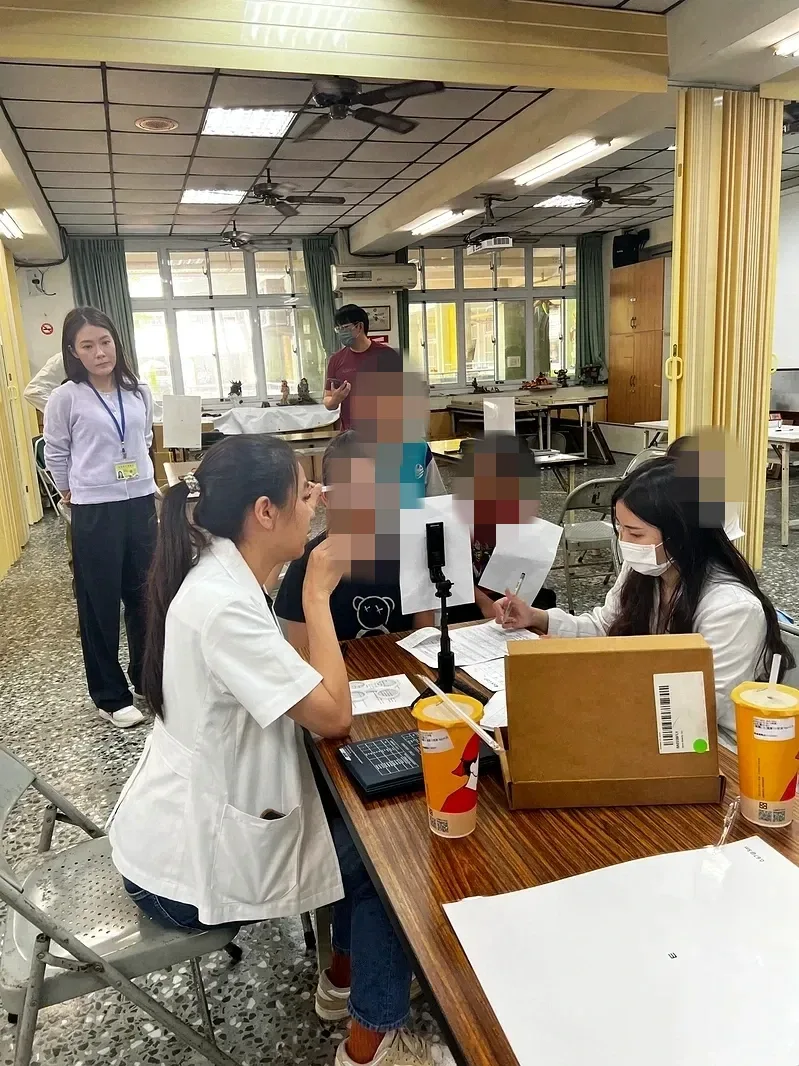
Besides instruments and rulers, the team also used picture cards and other tools to see, from different angles, how well a child's eyes work together. All results were reviewed by professionals to determine which children need further arrangements.
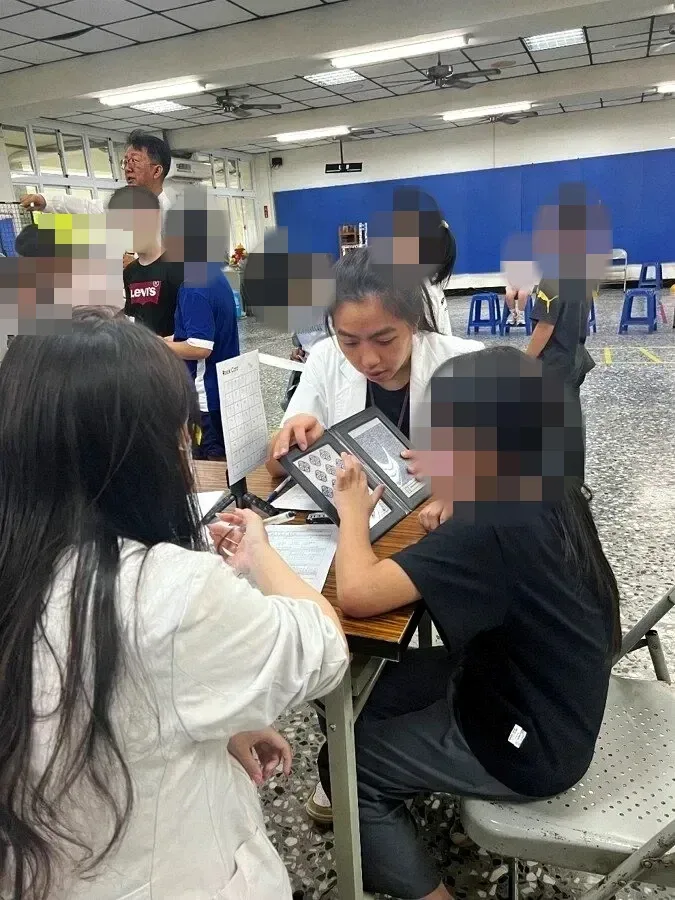
Four steps: measurement, assessment, exercises, follow-up
What sets this initiative apart is that it does not stop at finding children who need attention. It connects the next steps into one process:
- Measurement: professionals visit schools to measure binocular vision
- Assessment: professionals review the complete results and decide whether follow-up is needed
- Exercises: children who need further support are given rotating prism vision exercises based on their assessment
- Follow-up: progress is tracked during the exercise period so professionals stay informed about each child
On the day of the event, the professional team also walked members of the participating charitable organization through the process, using measurement data on a tablet to explain how follow-up exercises are arranged.
Rotating prism vision exercises use changing prism settings to let children practice eye coordination and merging the images from both eyes.
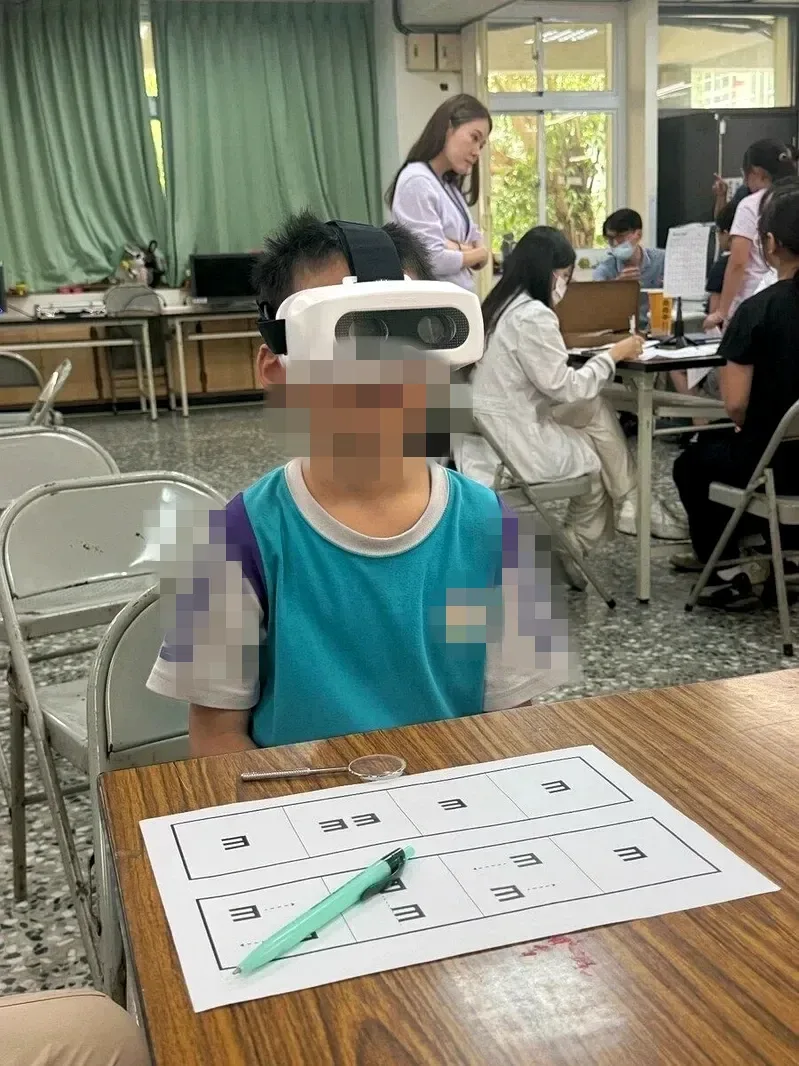
The device runs the exercises through a consistent process and keeps records. Whether a child needs the exercises, and how they are arranged, is decided by professionals based on the assessment. Two reminders for parents:
- These exercises focus on eye coordination and have nothing to do with the strength of a child's glasses
- Exercises should be done with professional assessment and guidance, not on your own
Support continues after the program ends
The initiative is also supported by the Rotary E-Club of District 3490. Club members said they will keep contributing resources after this year's program ends, helping children who need it continue with follow-up exercises and check-ins, so the service is not cut off when the program period ends.
Academic research provides the baseline data, medical and eye care professionals handle measurement and interpretation, and charitable resources keep the service going. Together, they aim to make sure every child who needs support is looked after from measurement through follow-up.
Signs parents can watch for
If your child has normal eyesight but often shows any of the following, consider a full binocular vision assessment by a qualified professional:
- Complains of tired eyes while reading or doing homework
- Often skips lines when reading
- Gets headaches or sees blurry text after a period of close-up work
- Has trouble reading for long periods
These signs do not necessarily mean there is a problem, but they are worth having a professional take a look.